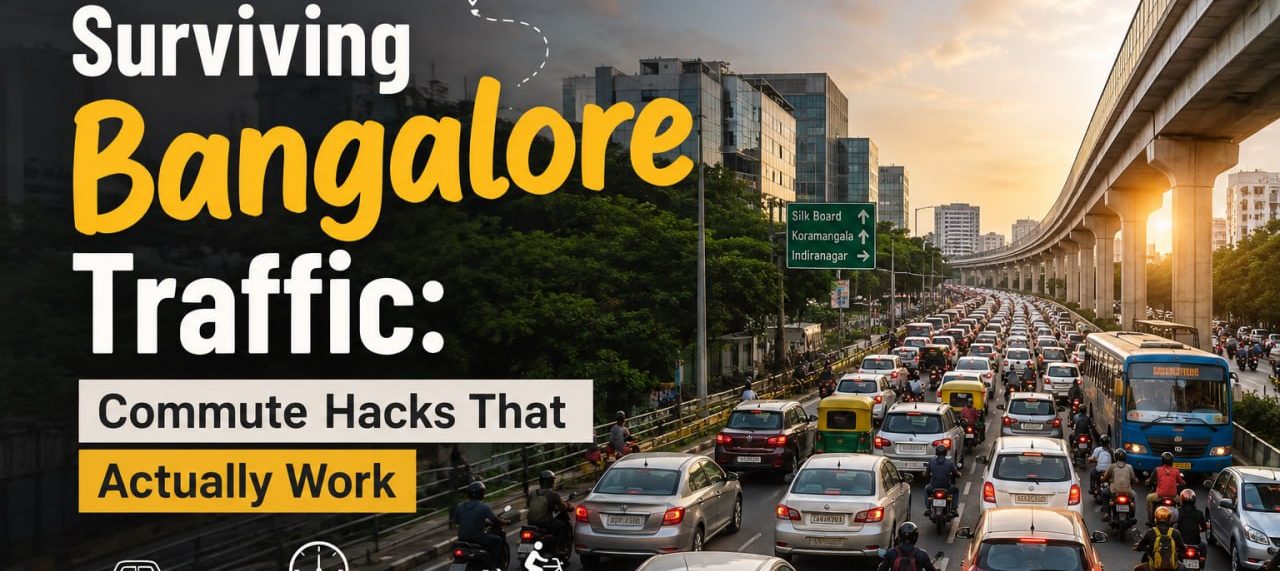
Surviving Bangalore Traffic: Commute Hacks That Actually Work
Wednesday June 10, 2026
If you’ve spent even one week in Bengaluru, you already know: the traffic here is a whole different beast. The city doesn’t really have peak hours. Every hour is peak hour. Whether you’re heading to Electronic City at 9 AM or returning from Koramangala at 8 PM, Bangalore road traffic has a way of turning a 10-minute drive into a 45-minute ordeal.
But people do get around. And some do it smarter than others.
Here are practical Bangalore commute tips that can genuinely save you time, nerves, and fuel, tested by folks who handle these roads every single day.
1. Time It Right (Or Pay the Price)
The most notorious spots for Bangalore traffic are Silk Board Junction, Hebbal Flyover, KR Puram Bridge, and Whitefield Main Road. These stretches come to a near-standstill between 8–10 AM and 6–9 PM on weekdays.
If your schedule has any flexibility, leave 30–45 minutes earlier than you think you need to. Not as a buffer, but as your actual target. Morning traffic in Bengaluru tends to ease a bit after 10:30 AM, and evening gridlock usually clears past 9:30 PM.
2. Use Google Maps and Waze (But Use Them Right)
Apps like Google Maps and Waze are your best friends for surviving Bangalore daily commute chaos. Google Maps gives you solid real-time route data, while Waze pulls live updates from other drivers, including accidents, signal jams, and road closures.
The trick: don’t just open the app when you’re stuck. Check it before you leave. A five-minute route check at home can save you 30 minutes on the road.
3. The Metro Is Underrated. Seriously.
If you’re staying near a Namma Metro station, this is one of the most underused Bangalore travel tips out there: just take the metro.
For corridors like Majestic to Whitefield, or MG Road to Baiyappanahalli, the metro cuts your travel time dramatically. No fuel costs, no parking headaches, and you reach without the stress that comes with Bangalore road traffic. Monthly passes are affordable, and the network keeps growing.
4. Try Ride Pooling on Fixed Routes
Apps like Rapido and Ola offer cab pooling options that work especially well on busy corridors. You split the fare, the roads have fewer cars, and you’re not the one behind the wheel getting frustrated.
For office-goers who travel the same route daily, ride pooling is one of those Bangalore traffic hacks that quietly pays off over a month, both in money saved and stress avoided.
5. Know Your Alternate Routes Before You Need Them
Every major road in Bengaluru has a lesser-known parallel route. But you don’t want to figure that out while already stuck. Spend a weekend or a lighter traffic day exploring your usual route’s alternatives. The interior roads through residential layouts often flow much better than main arterials.
Google Maps will suggest these during peak hours, but knowing them in advance means you switch faster, without second-guessing.
6. For Short Distances, Two-Wheelers Win Every Time
This one’s for residents rather than visitors, but it’s worth mentioning: a bicycle or scooter can cover distances in 20–25 minutes that would take a car well over an hour. In dense areas like Indiranagar or Koramangala, two-wheelers simply thread through traffic that cars can’t.
7. Give Yourself Mental Breathing Room
No amount of Bengaluru traffic guide knowledge eliminates the slow days. Accepting that some delays will happen, and building them into your schedule rather than fighting them, is genuinely the calmest strategy. Keep a podcast, audiobook, or playlist ready. The commute becomes far more manageable when it’s not wasted time.
Staying Near the Right Location Helps Too
A big part of surviving Bangalore traffic is simply where you’re based. Staying centrally, close to your key destinations or a metro line, cuts your daily commute time significantly.
At Vaishnavi Residency, our location keeps you well-connected to major parts of the city, so you spend more time doing what you came to Bangalore for and less time sitting in traffic.
Planning a stay in Bengaluru? Check out our rooms and availability at vaishnaviresidency.com.